Why Do Hot Water Lines Fail First Under Foundation Slabs?
In Melbourne and coastal Brevard County, copper tubing was standard for under-slab hot water distribution in homes built across several decades. While copper is an exceptionally durable metal, running hot water through subterranean lines introduces severe physical stresses that cold water lines rarely encounter.
Every time someone in your home takes a shower, runs the dishwasher, or washes laundry, hot water at 120°F to 140°F courses through the copper pipe, causing the metal to expand. When the tap is closed, the pipe cools down and contracts. When copper tubing is embedded in concrete or rests directly against abrasive Florida silica sand without protective sleeving, this constant thermal expansion and contraction causes friction. Over years, the outer copper wall is gradually rubbed thin from the outside, while aggressive dissolved minerals and chloramines in coastal municipal water wear it down from the inside.
Eventually, a pinhole perforation ruptures through the pipe wall. Once this happens, pressurized hot water escapes under the foundation 24 hours a day, saturating the slab and creating an urgent need for professional hot water slab leak repair Melbourne homeowners can rely upon to protect both their foundation and their utility budget.
Noticed a Hot Floor or Constant Heater Running?
Our Melbourne technicians quickly isolate hot water manifold lines and confirm subterranean breaches.
Telltale Symptoms of a Hot Water Slab Leak
Because hot water lines introduce thermal energy beneath the foundation, they produce distinctive symptoms that distinguish them from cold line leaks:
- Distinct warm spot on floor Melbourne: Walking barefoot across tile, vinyl, or carpet and encountering an unnaturally warm or hot patch of flooring. This warm zone marks the thermal plume rising from the escaping hot water line beneath.
- Water heater running constantly Melbourne: Gas water heaters firing their burners around the clock, or electric tanks continually humming and cycling heating elements because the tank is constantly losing hot water into the ground.
- High electric or gas utility bills: Heating hundreds of gallons of water that immediately seep into the sand below your house causes an immediate, massive spike in your monthly energy bills.
- Running out of hot water rapidly: Because hot water is continually escaping from a hot water line leak under slab Melbourne location, your water heater never maintains a full reservoir of heated water for household showers and laundry.
- Hissing sounds near the water heater: A steady acoustic rushing noise audible near the water heater tank or within bathroom walls even when all faucets are shut tight.
Pinpointing Hot Water Leaks with High-Resolution Thermal Imaging
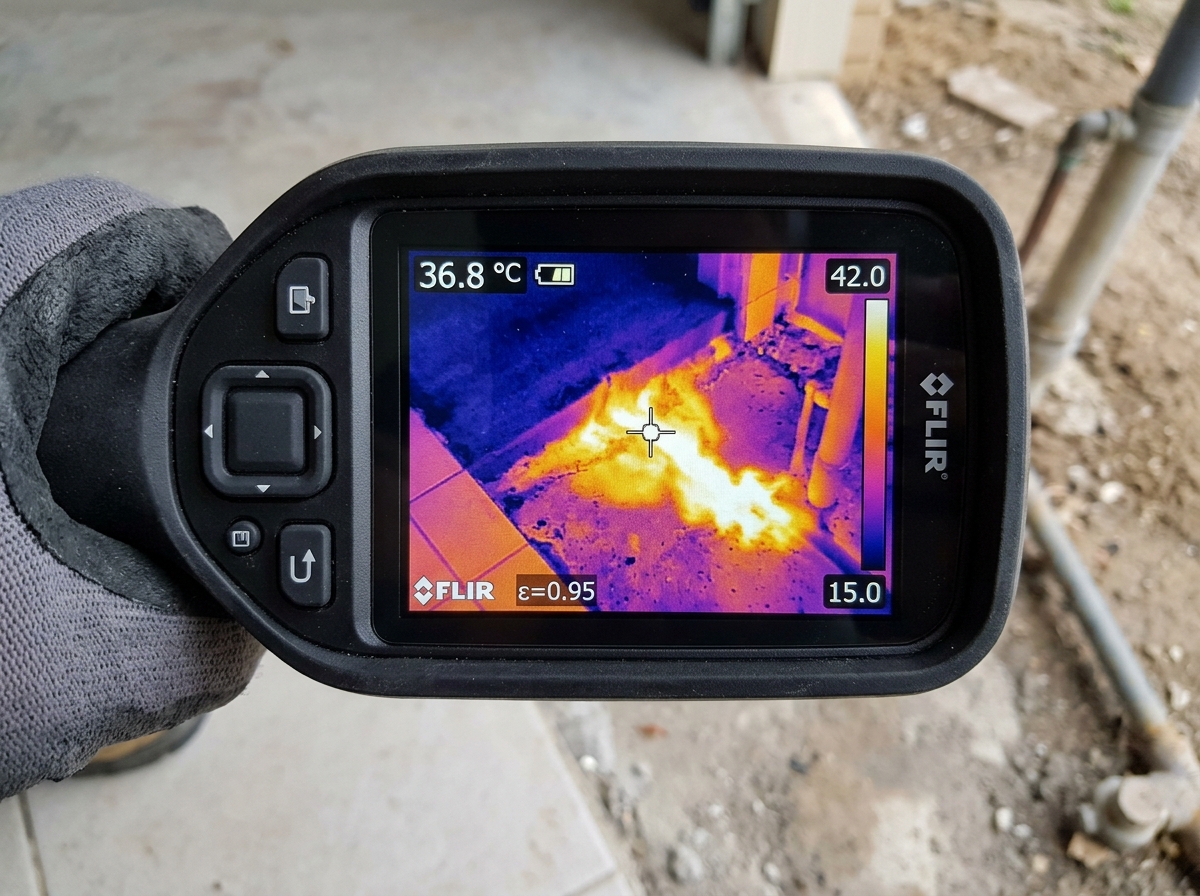
One of the greatest diagnostic advantages when locating a hot water foundation breach is our utilization of high-resolution thermal imaging cameras. Hot water radiates thermal energy through concrete slabs and finished floor coverings, creating a distinct infrared footprint.
During our specialized slab leak detection in Melbourne, technicians scan your interior floors with FLIR infrared sensors. The hot water plume displays on our digital monitors as bright orange, yellow, and red thermal heat signatures. By combining thermal mapping with sensitive acoustic ground microphones, we pinpoint the exact subterranean rupture coordinate down to a single floor tile, completely eliminating destructive exploratory digging.
Repair Options: Direct Spot Repair vs. Overhead Reroute
Once a hot water line break is confirmed, Melbourne homeowners face an important technical choice:
1. Direct Under-Slab Spot Repair
If the leak is isolated in an open, accessible area (such as a laundry room or utility closet) and the remainder of the plumbing network shows no evidence of deterioration, technicians can cut a neat access opening in the slab, excavate the wet sand, and solder in a heavy-gauge type K copper or PEX bypass splice. However, because hot water lines expand along their entire length, fixing one spot may simply push thermal stress to the next thinned section down the line.
2. Overhead Hot Water Line Rerouting (Recommended)
In most Melbourne homes, the safest, longest-lasting solution is an overhead hot line reroute. Rather than jackhammering expensive tile in your kitchen or living room, we abandon the leaking underground hot line entirely. Our team installs a brand new, insulated PEX water line that travels up through an interior wall, across attic trusses, and drops cleanly into your fixtures. For comprehensive details, review our slab leak reroute Melbourne page.
If your home has suffered multiple leaks or contains deteriorating thin-wall copper throughout, you may also consider full whole-house repiping in Melbourne to completely retire all subterranean supply lines.
Stop Wasting Hot Water Under Your Concrete Slab
Call our Melbourne foundation plumbing specialists to schedule immediate thermal diagnostics.
Immediate Steps While Awaiting Your Service Appointment
If you have confirmed a hot floor or nonstop water heater operation, take these protective steps right away:
- Turn off the cold inlet valve to the water heater: Locate the shutoff valve situated directly above your water heater tank and turn it off. This depresses the entire hot water plumbing branch and stops the underground leak without shutting off cold water to toilets and sinks.
- Turn off power or gas to the water heater: Flip the designated water heater circuit breaker in your electrical panel, or switch a gas control valve to "Pilot" or "Off". This prevents the heating elements from burning out while the tank lacks continuous pressure.
- Call our diagnostic team: Reach out to (888) 205-7875 to arrange comprehensive thermal leak detection and discuss customized repair options.
For additional support regarding property damage and documenting access costs for insurance adjusters, visit our slab leak insurance claim Melbourne guide, or browse our local service areas across Brevard County.